

|
|
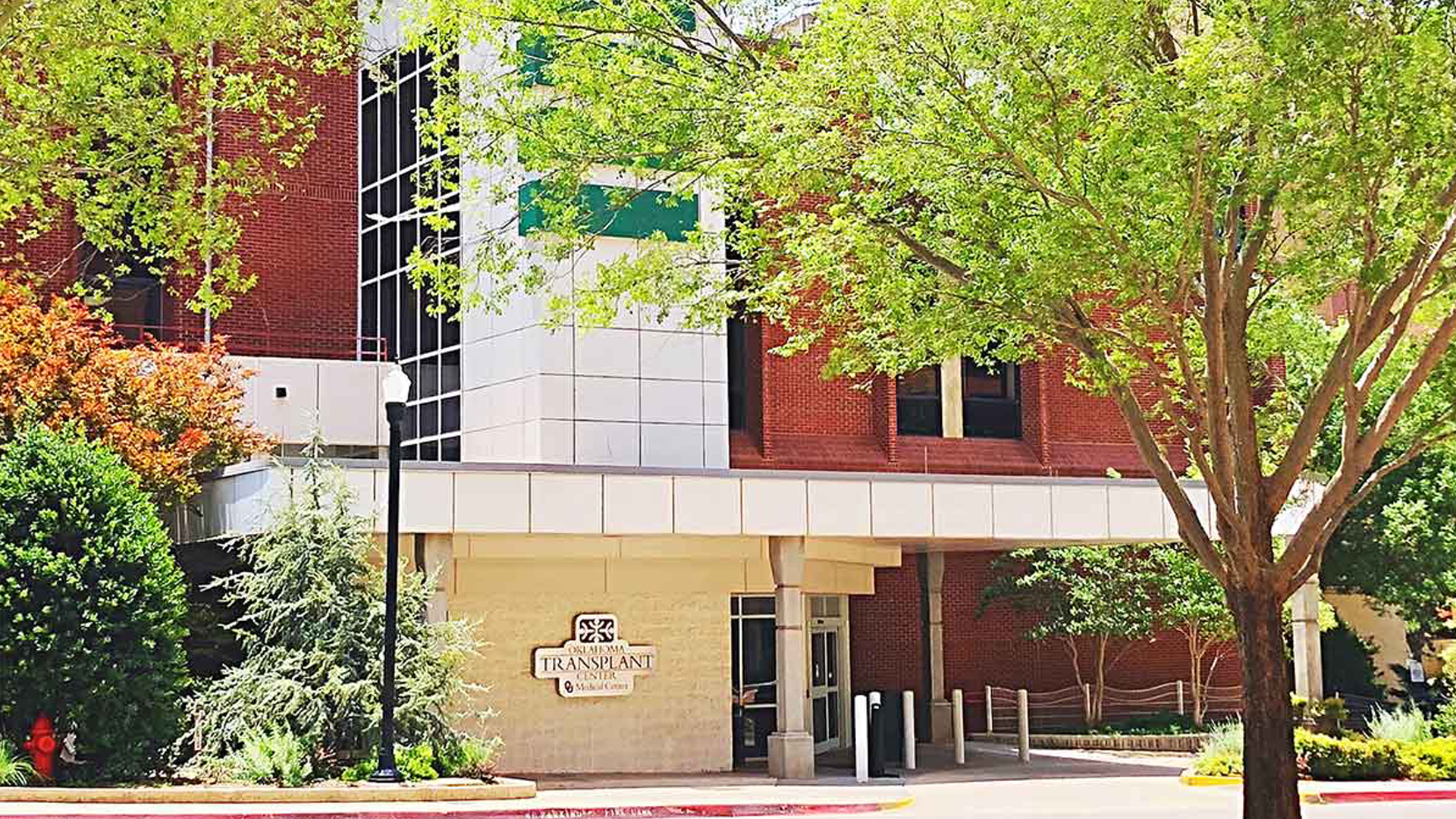
A donor's family meets recipient and family for first time at the Oklahoma Transplant Center, February 17th, 2012
|
|
Read more...
|
|
|
Findings show minimally-invasive surgery offers benefits
The benefits of minimally-invasive treatment of uterine cancer is the subject of a study co-authored by Dr. Joan Walker, a gynecologic oncologist with the Peggy and Charles Stephenson Cancer Center, and published in this month’s Journal of Clinical Oncology. 
Researchers at the University of Oklahoma Health Sciences Center enrolled a substantial number of the patients in this important clinical trial funded by the National Cancer Institute.
The study evaluated the long-term effectiveness of both laparoscopy and laparotomy in the treatment of uterine cancer. Laparoscopy is a surgical technique that allows a surgeon to operate through small incisions as opposed to the larger incisions required for laparotomy or open surgery.
Uterine cancer affects more than 47,000 women and claims the lives of about 8,000 women in the United States each year.
Research previously had shown clear advantages for uterine cancer patients who undergo laparoscopy versus laparotomy for the removal and staging of their cancer.
“We knew there were benefits of minimally invasive surgery to the patient in terms of less time in the hospital and a faster recovery, but we did not yet know if the long-term outcomes would be as good in terms of recurrence of the cancer and survival. That is where this study comes in,” Walker said.
|
|
Read more...
|
|
Despite new treatments, lung cancer continues to prove a deadly disease.
Only 15 percent of patients survive.
But researchers at the Peggy and Charles Stephenson Cancer Center hope to change that with a new approach that utilizes special targeted nanoparticles.
|
|
Read more...
|
|
|
Tobacco Settlement Endowment Trust Phase 1 Ceremony 2/16/12
|
|
Read more...
|
Doctors are seeing a significant increase in the number of children suffering kidney stones.
While pediatric urologists don’t yet know the reason for the increase, there are things parents can do to help protect their children and themselves.
"We have definitely seen an increase in the number of children diagnosed with kidney stones,” said Blake Palmer, M.D., a pediatric urologist with OU Children’s Physicians. “Pediatricians are doing a great job of identifying these children now and referring them for treatment, which may account for some of the increase. However, better diagnosis alone cannot explain the overall increase in kidney stones in children." 
Texas researchers found that kidney stone frequency, or urolithiasis, increased by about 12 percent a year during an eight-year period that ended in 2007. The findings were presented at a recent meeting of the American Academy of Pediatrics.
"There are factors that increase the risk of developing kidney stones,” Palmer said. “Diets that are high in oxalate, animal protein and sodium can increase your risk of developing some types of kidney stones. Not consuming enough fluids, especially water, can also put you at risk."
|
|
Read more...
|
|
|
|
|
<< Start < Prev 1 2 3 4 5 6 Next > End >>
|
|
Page 1 of 6 |